

- admin
- The Importance of Stability Testing for Pharmaceuticals
- July 1, 2026
- No Comments
The Importance of Stability Testing for Pharmaceutical Manufacturing
Every pharmaceutical product, whether it is a tablet, capsule, injection, syrup, cream, or ointment, must remain safe, effective, and of consistent quality throughout its intended shelf life. Patients and healthcare professionals rely on medicines to perform as expected until the expiry date, making product stability a critical aspect of pharmaceutical manufacturing.
Stability testing for pharmaceuticals is the scientific process of evaluating how a medicine maintains its quality over time under different environmental conditions such as temperature, humidity, and light. The data generated from these studies helps determine a product’s shelf life, recommended storage conditions, packaging requirements, and overall suitability for commercial distribution.
Beyond meeting regulatory requirements, stability testing plays a significant role in pharmaceutical quality assurance, ensuring that every batch delivers the intended therapeutic benefits while protecting patient safety.
What Is Stability Testing in Pharmaceuticals?
Stability testing is a systematic study performed to determine how the quality of a pharmaceutical product changes over time. During these studies, products are stored under controlled environmental conditions and evaluated at predetermined intervals to monitor their physical, chemical, microbiological, and therapeutic characteristics.
The primary objectives of stability testing include:
- Determining the product’s shelf life
- Establishing appropriate storage conditions
- Evaluating packaging performance
- Identifying potential degradation products
- Supporting regulatory submissions
- Maintaining consistent product quality
The results provide manufacturers with scientific evidence that the medicine will continue to meet quality specifications throughout its marketed lifespan.
Why Stability Testing Is Important
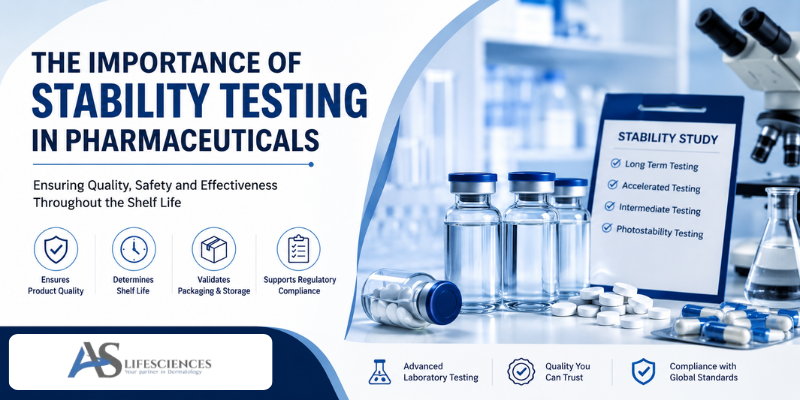
Stability testing is important because it ensures that pharmaceutical products remain safe, effective, and of consistent quality throughout their shelf life. It helps determine the correct expiry date, recommended storage conditions, and packaging suitability while supporting regulatory compliance. By identifying any changes in a product over time, stability testing helps manufacturers maintain quality standards and protect patient safety.
Ensures Patient Safety
The foremost purpose of stability testing is to protect patients. Medicines that degrade over time may lose their effectiveness or develop impurities that could affect product quality. Stability studies help identify these changes before products reach the market, ensuring patients receive medicines that meet established quality standards.
Determines Accurate Shelf Life
Every pharmaceutical product carries an expiry date based on scientific evidence rather than estimation. Stability testing provides the data needed to determine how long a medicine can be safely stored while maintaining its intended quality, potency, and performance.
An accurately established shelf life helps healthcare providers, distributors, and consumers use medicines with confidence.
Establishes Proper Storage Conditions
Environmental factors significantly influence pharmaceutical stability. Some medicines remain stable at room temperature, while others require refrigeration or protection from moisture and light.
Stability studies help determine storage recommendations such as:
- Store below 25°C
- Protect from direct sunlight
- Keep in a cool and dry place
- Refrigerate between 2°C and 8°C when required
Following these storage conditions helps preserve product quality throughout transportation, warehousing, and everyday use.
Supports Regulatory Compliance
Regulatory authorities require comprehensive stability data before approving pharmaceutical products for commercial distribution. Stability studies are conducted according to internationally recognized guidelines, including those developed by the International Council for Harmonisation (ICH), which establish standardized testing conditions and documentation requirements.
Well-documented stability data demonstrates that a product consistently meets quality standards throughout its shelf life and supports successful regulatory submissions.
Validates Packaging Performance
Packaging serves as the first line of protection against environmental exposure. Containers such as blister packs, bottles, tubes, vials, and sachets are designed to safeguard medicines from moisture, oxygen, contamination, and light.
Stability testing evaluates whether the selected packaging effectively preserves product quality under normal storage conditions. If necessary, manufacturers can improve packaging materials before large-scale production begins.
Types of Stability Testing
Different stability studies are conducted depending on the stage of product development and regulatory requirements.
Long-Term Stability Testing
Long-term stability studies evaluate products under recommended storage conditions over an extended period. These studies generate the primary data used to establish shelf life and expiry dates.
Accelerated Stability Testing
Accelerated stability studies expose pharmaceutical products to elevated temperature and humidity conditions to speed up natural degradation. These studies provide valuable insights during product development and help predict long-term stability within a shorter timeframe.
Intermediate Stability Testing
Intermediate stability testing is performed when accelerated studies produce unexpected or borderline results. It provides additional information under moderate environmental conditions to better understand product behavior.
Photostability Testing
Some pharmaceutical ingredients are sensitive to light exposure. Photostability studies evaluate whether ultraviolet or visible light affects product appearance, potency, or chemical composition.
In-Use Stability Testing
Products intended for repeated use, such as eye drops, multidose syrups, and topical formulations, undergo in-use stability testing to assess product quality after opening. These studies ensure that medicines remain stable throughout their recommended usage period.
Factors That Influence Pharmaceutical Stability
Several factors can affect the stability of pharmaceutical products during manufacturing, storage, and distribution.
Temperature: Excessive heat may accelerate chemical degradation and reduce drug potency.
Humidity: Moisture can alter the physical properties of tablets, capsules, powders, and other moisture-sensitive formulations.
Light Exposure: Certain active pharmaceutical ingredients degrade when exposed to ultraviolet or visible light.
Oxygen: Oxidation reactions may lead to changes in chemical composition and product effectiveness.
Packaging Materials: High-quality packaging minimizes environmental exposure and extends product stability.
Formulation Composition: The compatibility of active pharmaceutical ingredients with excipients directly influences overall product stability.
Understanding these factors allows manufacturers to develop formulations that remain reliable under real-world storage conditions.
Benefits of Stability Testing for Pharmaceutical Manufacturers
Stability testing offers advantages that extend beyond regulatory compliance. Reliable stability data helps manufacturers improve product quality, reduce the likelihood of product recalls, optimize packaging selection, and support successful product registration in domestic and international markets.
For companies involved in contract manufacturing or pharmaceutical exports, comprehensive stability studies demonstrate a commitment to quality, consistency, and compliance with global regulatory expectations. These studies also contribute to stronger customer confidence by providing evidence that products will maintain their intended performance throughout distribution and storage.
Frequently Asked Questions
What is stability testing in pharmaceuticals?
Stability testing evaluates whether a pharmaceutical product remains safe, effective, and of consistent quality over time. It helps determine the product’s shelf life and recommended storage conditions.
Why is stability testing important?
Stability testing ensures medicines maintain their quality, safety, and effectiveness until their expiry date. It also supports regulatory compliance and accurate product labeling.
What types of stability testing are performed?
The main types include long-term, accelerated, intermediate, and photostability testing. Each study helps assess product stability under different environmental conditions.
Does A.S. Lifesciences conduct stability testing?
Yes, A.S. Lifesciences conducts stability testing as part of its quality assurance process. These studies help ensure product reliability, shelf-life determination, and compliance with industry standards.
Ensure Pharmaceutical Quality with A.S. Lifesciences
Looking for a reliable pharmaceutical manufacturing partner committed to quality and compliance? A.S. Lifesciences follows stringent quality control practices, including stability testing, to help ensure that every product meets industry standards for safety, effectiveness, and shelf life. Whether you need third-party manufacturing or contract manufacturing solutions, our experienced team is here to support your business with dependable pharmaceutical products.
Contact A.S. Lifesciences today to discuss your manufacturing requirements and discover how our quality-driven approach can help bring your products to market with confidence.
Recent Posts
Complete Guide to Dermatology Contract Manufacturing
How to Select a Pharma Manufacturing Partner
How to Choose the Right Pharmaceutical Partner in India
Categories
Tag Cloud